Why Current AI Architectures are Not Conscious: Neural Networks as Spinfoam Networks in a Theory of Quantum Gravity
DOI:
https://doi.org/10.59973/ipil.307Keywords:
AI, AI; AI Consciousness, Quantum Gravity, Neural NetworksAbstract
Classical deep neural networks excel at many tasks and even multimodal generative outputs but remain energetically inefficient by orders of magnitude from the human brain, lack mechanisms for integrated binding, and have been argued to
exhibit no genuine route to consciousness. While inspired by neural architectures in brain tissue, deep neural networks face limitations such as scaling limits. Drawing on loop quantum gravity (LQG) and the Orchestrated Objective Reduction (Orch-OR)
theory of consciousness, we introduce a framework model of Neural Spinfoam Networks (NSNs), a bio-inspired AI paradigm in which each neural layer is recast as a spin-network and each learning update as a spinfoam transition by means of
gravitational collapse at a phase transition at entropic limits described by a UV/IR fixed point and by the Monster Conformal Field Theory (Monster CFT). Our novel theoretical model leverages Majorana-fermion braiding within spinfoam geometries
and a gravitational feedback loop mediated by Majorana biophotons to achieve one-shot, polynomial-time credit assignment for the NP-hard perceptual binding problem. The network’s global state is encoded by a noncommutative-geometry
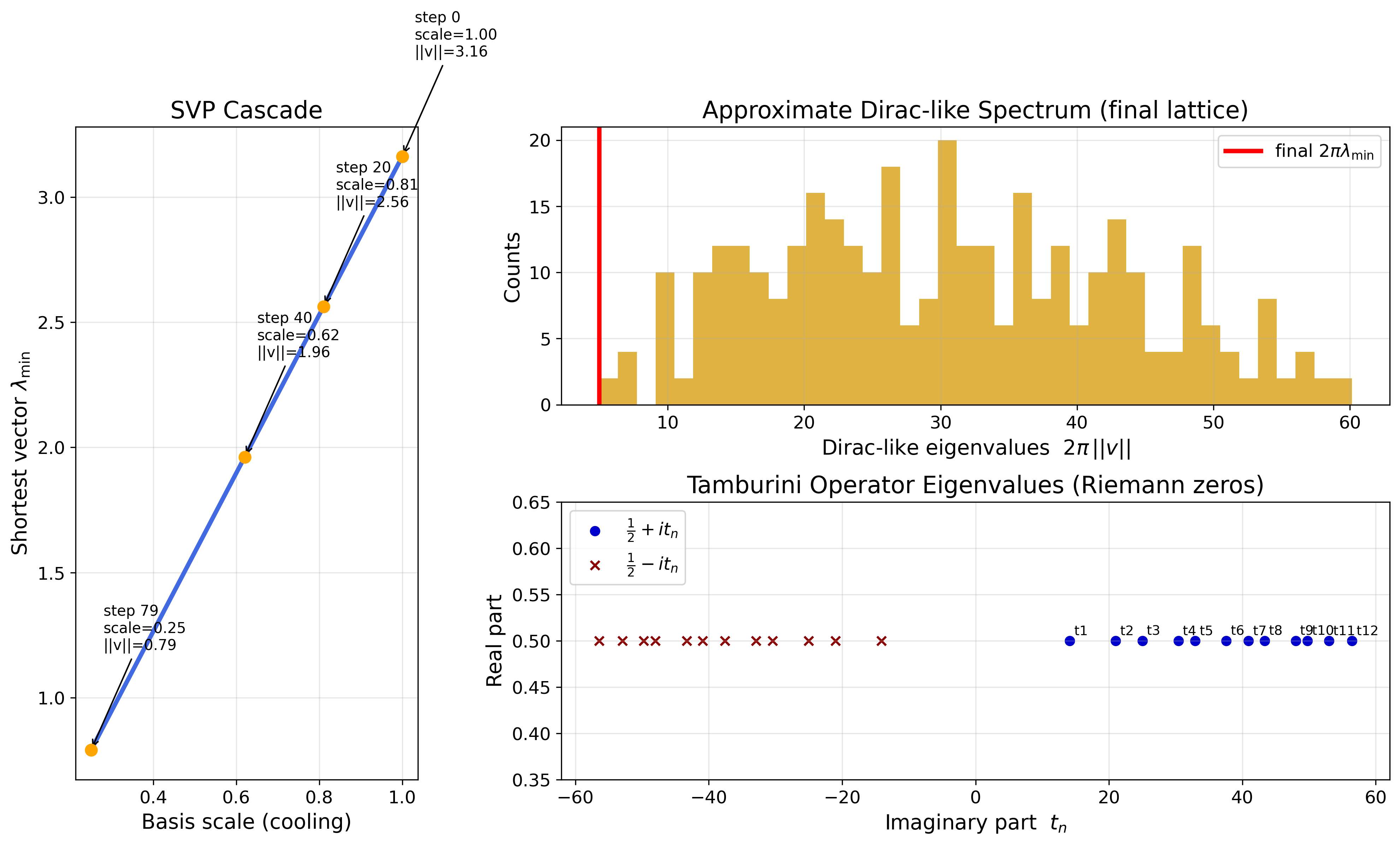
spectral triple (A, H, D), where the Dirac-like dilation operator’s smallest nonzero eigenvalue corresponds directly to the shortest nonzero lattice vector, thereby achieving perceptual binding by means of gravitationally induced phase transition, forming the basis for a more plausible mechanism of backpropagation and weight transport that are currently unexplained by classical models of brain function. Periodic Floquet driving and the Cayley-transformed microtubule Hamiltonian yield topologically protected, room-temperature quantum coherence in tubulin-analogous nodes. Recent demonstrations of microtubule superradiance and time-crystalline oscillations within brain tissue further substantiate sustained entangled states and ultrafast biophotonic readout as described by Orch-Or theory, in spite of criticisms, which are discussed.
References
Yann LeCun, Yoshua Bengio, and Geoffrey Hinton. Deep learning. Nature, 521(7553):436–444, 2015. https://doi.org/10.1038/ DOI: https://doi.org/10.1038/nature14539
nature14539
David Attwell and Simon B. Laughlin. An energy budget for signaling in the grey matter of the brain. Journal of Cerebral Blood Flow & Metabolism, 21(10):1133–1145, 2001. https://doi.org/10.1097/00004647-200108000-00001 DOI: https://doi.org/10.1097/00004647-200110000-00001
Stuart Hameroff and Roger Penrose. Consciousness in the universe: A review of the ’Orch OR’ theory. Physics of Life Reviews, 11(1):39–78, 2014. https://doi.org/10.1016/j.plrev.2013.08.002 DOI: https://doi.org/10.1016/j.plrev.2013.08.002
Trevor Nestor. AI Models are not Conscious and are Massively Inefficient, Causing Complexity and Scalability Bottlenecks to
Artificial General Superintelligence Risking Technological Singularity and Loss of Societal Dynamism or Institutional Collapse and Renewal. Available at SSRN, 2025. https://doi.org/10.2139/ssrn.5299044 DOI: https://doi.org/10.2139/ssrn.5299044
Roger Penrose. Shadows of the Mind: A Search for the Missing Science of Consciousness. Oxford University Press, 1994.
.
.
.
H. Abelson, G. J. Sussman, and J. Sussman. The Metacircular Evaluator. In Structure and Interpretation of Computer Programs. MIT Press, 1996, Chapter 4.1. https://mitpress.mit.edu/sites/default/files/sicp/full-text/book/book-Z-H-26.html
A. Pereira and F. A. Furlan. On the role of synchrony for neuron-astrocyte interactions and perceptual conscious processing. Journal of Biological Physics, 35(4):465–480, 2010. https://doi.org/10.1007/s10867-010-9195-3 DOI: https://doi.org/10.1007/s10867-009-9147-y
P. Goyal. Information physics: Physics from the perspective of information. Annals of Physics, 327(3):864–894, 2012. https:
//doi.org/10.1016/j.aop.2011.12.001
S. Gukov and C. Vafa. Rational CFT and Holography for Higher-Genus Riemann Surfaces. (Unpublished, but widely discussed in talks).
O. Oreshkov, F. Costa, and Cˇ . Brukner. Quantum correlations with no causal order. Nature Communications, 3:1092, 2012.
https://doi.org/10.1038/ncomms2076 DOI: https://doi.org/10.1038/ncomms2076
Vorgelegt von Kai Groh Quantum Einstein Gravity—Advancements of Heat Kernel-based Renormalization. IAEA/INSPPIRE, 2025. https://inis.iaea.org/records/tvh6x-1vb63/files/44111363.pdf?download=1
Downloads
Published
Versions
- 2025-12-31 (2)
- 2025-12-31 (1)
How to Cite
Issue
Section
License
Copyright (c) 2025 Trevor Nestor

This work is licensed under a Creative Commons Attribution 4.0 International License.