Grid Physics: The Geometric Unification of Fundamental Interactions via Vacuum Impedance
DOI:
https://doi.org/10.59973/ipil.305Keywords:
Grid Physics, FCC Lattice, Vacuum Impedance, Magic Angle Graphene, Nuclear Topology, Simureality, 137Abstract
Recent proposals in Information Physics posit that the physical universe may be modeled as a discrete computational substrate. We present Grid Physics, a framework exploring the hypothesis that spacetime acts as a Face-Centered Cubic (FCC) information lattice governed by the Principle of Computational Optimization (ΣK → min). Unlike standard models dependent on arbitrary fitting, we demonstrate that fundamental physical constants can be interpreted as emergent geometric impedances of this discrete vacuum. Specifically: a) Proton-to-Electron Mass Ratio (μ ≈ 6π5) and the Fine-Structure Constant (α−1 ≈ 137.036) are modeled as intrinsic geometric properties of the lattice interface; b) We define the ”Entropic Impedance Factor” (γsys ≈ 1.0418)—numerically consistent with the Proton Radius Anomaly—as the information entropy loss inherent in
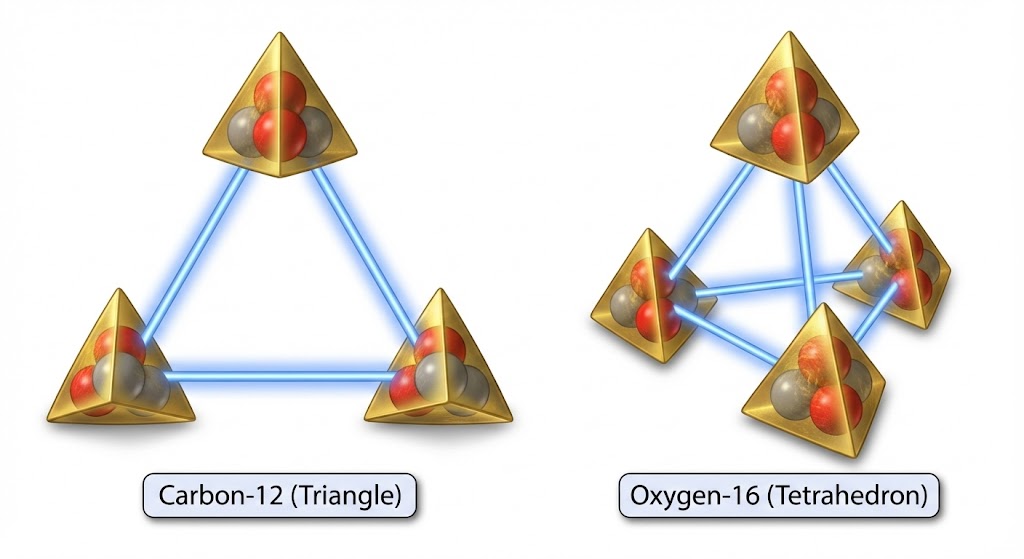
projecting continuous spherical symmetries onto a discrete grid; c) We show that atomic nuclei can be modeled as crystalline clusters of Alpha-particles, yielding binding energy predictions with > 99.9% correlation to experimental data; d) We propose that Superconductivity in condensed matter (e.g., Twisted Bilayer Graphene) represents a state of Geometric Resonance (N/137) between the material lattice and the vacuum impedance. This framework suggests that physical laws may be viewed as runtime optimization protocols of a discrete system, offering a unified geometric perspective on mass, nuclear stability, and conductivity consistent with the Mass-Energy-Information Equivalence principle.
References
Tiesinga, E., et al. (2021). CODATA recommended values of the fundamental physical constants: 2018. Reviews of Modern Physics, 93(2).
Bostrom, N. (2003). Are You Living in a Computer Simulation? Philosophical Quarterly, 53(211).
Vopson, M. M. (2019). The mass-energy-information equivalence principle, AIP Advances, (9) 095206 (2019).
Deutsch, D. (1985). Quantum theory, the Church-Turing principle and the universal quantum computer. Proc. R. Soc. Lond. A, 400.
Li, H., et al. (2024). Evolution of flat bands in MoSe2/WSe2 moir´e lattices. arXiv preprint arXiv:2409.07987.
Cao, Y., et al. (2018). Unconventional superconductivity in magic-angle graphene superlattices. Nature, 556.
Krasznahorkay, A. J., et al. (2016). Observation of Anomalous Internal Pair Creation in 8Be. Physical Review Letters, 116.
Downloads
Published
How to Cite
Issue
Section
License
Copyright (c) 2026 Pavel Popov

This work is licensed under a Creative Commons Attribution 4.0 International License.